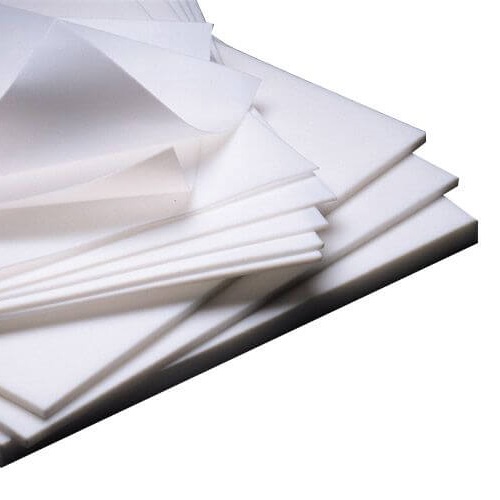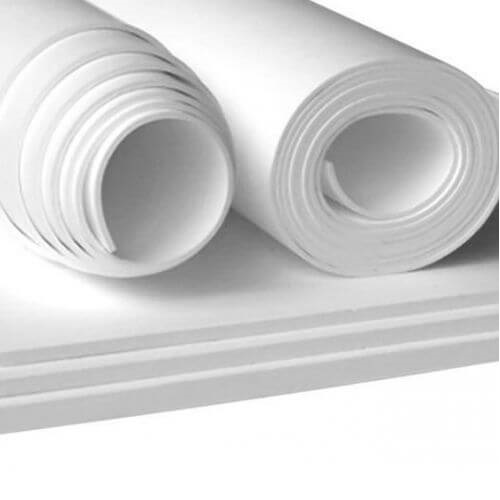

PTFE sheets are widely used in industries requiring high chemical resistance, low friction, and excellent thermal stability. At Ningbo Kaxite Sealing Materials Co., Ltd., we focus on delivering superior PTFE SHEET products that meet rigorous industrial standards. Our experience in manufacturing ensures that our customers can rely on consistent quality. In this article, we will explore troubleshooting steps to ensure optimal performance when working with PTFE sheets, highlighting our product parameters and expert practices.
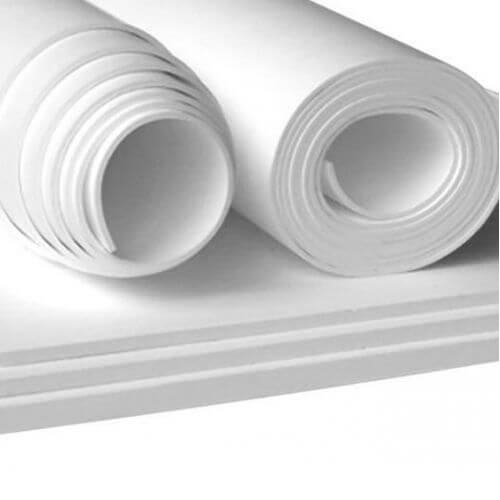
Understanding the reasons behind common issues when working with PTFE sheets is essential for ensuring optimal performance and longevity. At Ningbo Kaxite Sealing Materials Co., Ltd., our experience with PTFE SHEET products has shown that most problems can be traced back to handling, processing, or environmental factors. By identifying these root causes, our clients can implement preventive measures and maintain the high quality that our factory guarantees.
PTFE sheets have excellent thermal resistance, but excessive or uneven heating can cause deformation, shrinkage, or temporary warping. Our factory carefully controls the thermal processing of PTFE SHEET to maintain its structural integrity.
Improper handling or cutting techniques can create stress points, which may compromise the sheet's performance. Our team ensures that each PTFE SHEET is processed under controlled conditions to reduce mechanical strain.
While PTFE sheets are highly resistant to most chemicals, residues from cleaning agents, oils, or adhesives can affect adhesion or surface finish. Our factory implements strict cleaning and storage protocols to minimize contamination risks.
Long-term exposure to unfavorable environmental conditions can degrade PTFE sheets. Our factory carefully stores PTFE SHEET products to protect them from external factors that may compromise quality.
Inconsistent thickness across a PTFE sheet can lead to uneven performance, particularly in sealing or insulation applications. Our factory uses precision extrusion and quality checks to ensure uniform thickness for every PTFE SHEET.
| Parameter | Potential Issue | Preventive Measure |
| Temperature Range | Warping or softening | Use controlled heating; avoid rapid temperature changes |
| Mechanical Handling | Edge fraying or deformation | Use sharp tools and gentle handling |
| Chemical Exposure | Surface discoloration or poor adhesion | Clean sheets before use; avoid reactive contaminants |
| Storage | Deformation or dust accumulation | Store flat in dry, shaded environments |
| Thickness | Uneven performance | Precision extrusion and quality inspection |
By understanding these factors and following preventive measures, our clients can significantly reduce the occurrence of issues. Kaxite Sealing, emphasizes that proper handling, storage, and awareness of PTFE SHEET limitations are key to achieving long-term performance and reliability in all industrial applications.
Early detection of issues with PTFE sheets is critical to maintaining operational efficiency and preventing costly downtime. At Ningbo Kaxite Sealing Materials Co., Ltd., our approach emphasizes systematic inspection and testing to identify potential problems before they escalate. By carefully evaluating each PTFE SHEET, we ensure that our customers receive reliable, high-performance products.
Visual inspection is the first step in identifying defects or inconsistencies. Our factory performs thorough checks on every PTFE SHEET before shipment.
Accurate dimensions are essential for proper fitting and application. At Ningbo Kaxite Sealing Materials Co., Ltd., our factory uses precision tools to verify sheet measurements.
PTFE sheets are designed to be flexible without cracking, but testing small samples can reveal brittleness or hidden stress points.
PTFE SHEET is widely used in chemical environments, but preliminary testing ensures that it will perform as expected.
Temperature variations can affect PTFE sheets. Our factory evaluates how the material responds to heating and cooling cycles to detect potential weaknesses.
| Inspection Method | Focus Area | Outcome |
| Visual Inspection | Surface and edges | Detect scratches, warping, and color inconsistency |
| Dimensional Verification | Thickness, length, width | Ensure accurate fitting and uniformity |
| Flexibility Test | Mechanical stress response | Identify brittleness and micro-cracks |
| Chemical Resistance Test | Chemical exposure | Confirm resistance and surface integrity |
| Thermal Response Evaluation | Temperature changes | Assess stability and resilience |
By combining these inspection and testing procedures, our clients can confidently use our PTFE SHEET products with minimal risk of operational issues. Ningbo Kaxite Sealing Materials Co., Ltd. ensures that every sheet meets stringent quality standards, providing long-term reliability in demanding industrial applications.
Once potential issues are identified, following structured troubleshooting steps can restore functionality and prevent further problems. At Ningbo Kaxite Sealing Materials Co., Ltd., we recommend the following methods:
| Parameter | Specification | Benefit |
| Thickness | 0.5mm to 50mm | Flexible choice for diverse industrial applications |
| Density | 2.1 g/cm³ | Ensures structural integrity and long-term stability |
| Temperature Range | -200°C to 260°C | Reliable in extreme temperature conditions |
| Chemical Resistance | All acids and bases except molten alkali metals | Suitable for demanding chemical environments |
| Color | White, Black, Custom | Matches diverse operational needs |
Implementing these troubleshooting steps allows our customers to maximize the lifespan and performance of our PTFE SHEET products.
At Ningbo Kaxite Sealing Materials Co., Ltd., quality is the foundation of everything we do. Our PTFE SHEET products are manufactured with meticulous attention to detail, combining advanced technology, precise control measures, and years of industry expertise to ensure consistent performance. Our factory’s approach focuses not only on production but also on rigorous quality assurance to guarantee that every sheet meets customer expectations.
Our factory utilizes state-of-the-art extrusion equipment to produce PTFE sheets with uniform thickness and density. This precision process ensures:
After extrusion, PTFE sheets undergo controlled sintering in our factory. This step enhances the material’s mechanical and thermal properties, providing:
Our quality team meticulously inspects each PTFE SHEET for any visual or surface defects. This inspection ensures:
To ensure our PTFE SHEET meets stringent specifications, we perform precise dimensional and mechanical tests:
Proper packaging and storage are critical for maintaining sheet quality. Our factory implements strict protocols:
| Quality Control Stage | Key Focus | Benefit |
| Extrusion | Thickness and density | Consistent mechanical strength and reliability |
| Sintering | Thermal stability | Improved heat resistance and dimensional stability |
| Surface Inspection | Visual and surface quality | Defect-free sheets with uniform finish |
| Dimensional Verification | Thickness and flatness | Accurate fitting and performance in applications |
| Packaging | Storage and transport | Maintains sheet integrity until delivery |
Through these comprehensive quality control measures, Ningbo Kaxite Sealing Materials Co., Ltd. ensures that every PTFE SHEET delivered meets the highest industrial standards. Our commitment to precision, durability, and reliability provides our clients with the confidence to use our products in demanding applications, knowing that our factory has rigorously verified every sheet for optimal performance.
PTFE sheets are essential in industries requiring durability, chemical resistance, and thermal stability. By understanding why issues occur, identifying problems early, and applying structured troubleshooting steps, our clients can achieve optimal performance. At Ningbo Kaxite Sealing Materials Co., Ltd., our PTFE SHEET products are manufactured under strict quality standards to ensure long-term reliability. Implementing these guidelines safeguards your operations, reduces downtime, and enhances productivity.
For inquiries about our PTFE SHEET products or to request custom specifications, contact our team today and experience the quality and reliability we provide.
Q1: How can I prevent warping when cutting PTFE sheets?
A1: Always use sharp, precise cutting tools and control the speed to avoid generating excessive heat. Our factory recommends securing sheets on flat surfaces and cutting at room temperature to prevent warping.
Q2: What should I do if the PTFE sheet surface develops scratches during installation?
A2: For minor scratches, gently polish with a soft cloth and PTFE-compatible mild agents. For deeper scratches, our PTFE SHEET can be trimmed or machined to restore functionality.
Q3: How do I address adhesion problems with PTFE sheets?
A3: Ensure the surface is free from dust, oils, or residues. Use a compatible primer, as recommended by our factory, to enhance bonding with adhesives or coatings.
Q4: How can I test chemical compatibility of PTFE sheets before use?
A4: Conduct small-scale pre-tests using the specific chemicals in your application. Our PTFE SHEET datasheets include detailed chemical resistance charts to guide safe usage.
Q5: What maintenance steps ensure long-term performance of PTFE sheets?
A5: Store sheets in a cool, dry environment away from direct sunlight. Regularly inspect for deformation, clean surfaces, and avoid mechanical stresses that could compromise integrity. Our factory provides guidance for storage and handling to maximize lifespan.