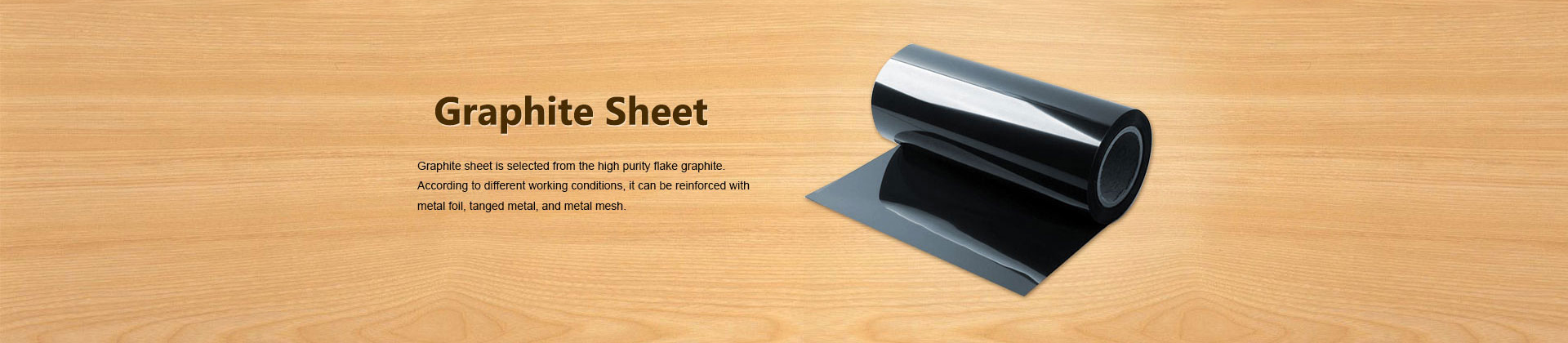
Selecting the right sealing material is one of the most consequential decisions in any industrial pipeline, flange, or mechanical system. Non-asbestos sheets and rubber gasket materials are two of the most widely used options across industries ranging from petrochemical and power generation to food processing and pharmaceuticals. While both serve the fundamental purpose of preventing leaks and maintaining system integrity, they are engineered from entirely different material compositions, designed for different operating conditions, and optimized for distinct performance requirements. Understanding these differences is not a matter of preference; it is a matter of safety, compliance, and long-term operational cost.
At Ningbo Kaxite Sealing Materials Co., Ltd., our engineering team works with clients daily who face exactly this decision. The choice between a Non-asbestos Sheet and a rubber-based gasket material depends on temperature range, chemical exposure, pressure ratings, and application environment. This article breaks down each material category in precise technical detail, compares their performance across critical parameters, and gives you the clear, factual guidance needed to make the right selection for your specific application.
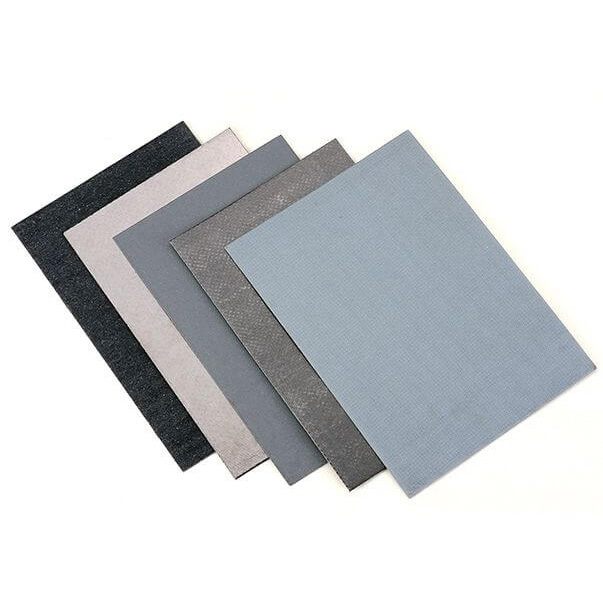
Non-asbestos sheets were developed as a direct response to the global phase-out of chrysotile and amphibole asbestos fibers, which were proven to cause serious respiratory diseases including mesothelioma. The engineering challenge was significant: asbestos had exceptionally high thermal resistance, mechanical strength, and chemical stability. Replacing it required combining multiple synthetic fiber types with precision-engineered binder systems to replicate and, in many cases, exceed those properties.
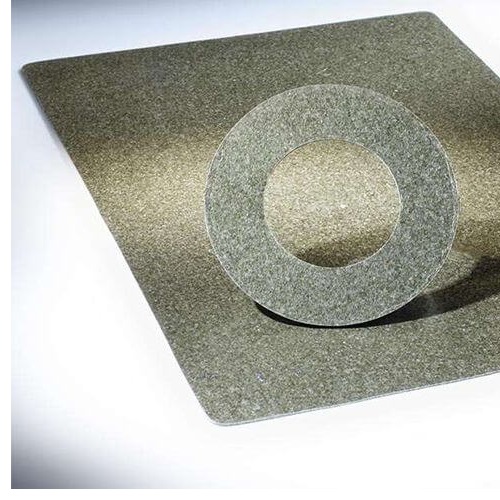
Our Non-asbestos Sheet products at Ningbo Kaxite Sealing Materials Co., Ltd. are manufactured using a calendering or beater-addition process, depending on the target application grade.
The raw material composition typically includes the following elements:
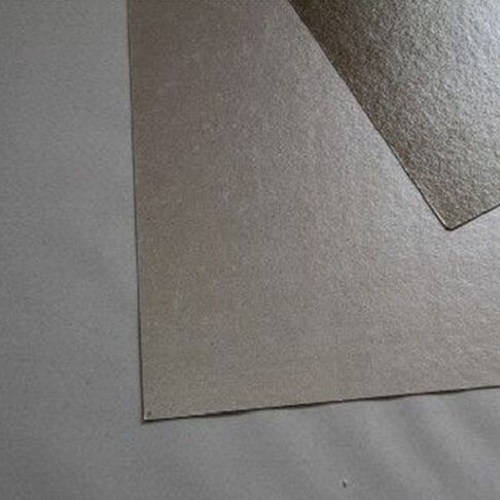
The result is a homogeneous, dense sheet material capable of maintaining a reliable seal under extreme conditions. Our factory produces Non-asbestos Sheet in standard sheet sizes of 1500mm x 1500mm and 1500mm x 3000mm, with thickness ranging from 0.4mm to 6.0mm. Each production batch is tested for compressibility, recovery rate, tensile strength, and fluid resistance before release.
One of the defining characteristics of Non-asbestos Sheet is its anisotropic structure, meaning its mechanical properties can differ slightly in the machine direction versus the cross direction. This is an important engineering consideration when cutting gaskets for high-pressure flanges. Our engineering team provides full technical data sheets with directional property values, ensuring our clients can orient their gasket blanks correctly for maximum sealing performance.
Non-asbestos sheet materials also offer a key advantage in terms of dimensional stability. Unlike elastomeric materials, they do not cold-flow significantly under sustained bolt load, which makes them particularly valuable in raised-face flange applications where creep relaxation would otherwise cause seal failure over time. This stability under sustained compressive stress is one of the primary reasons our Non-asbestos Sheet products are specified in critical industrial sealing applications worldwide.
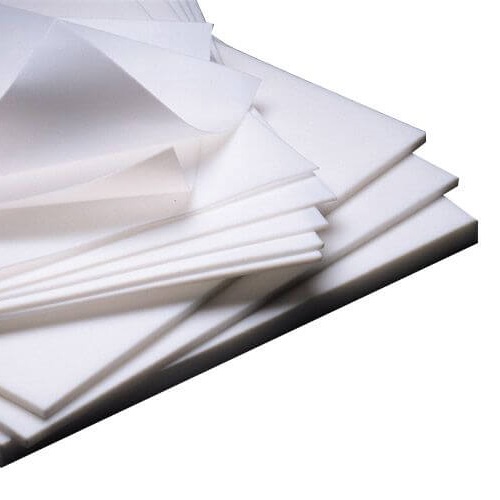
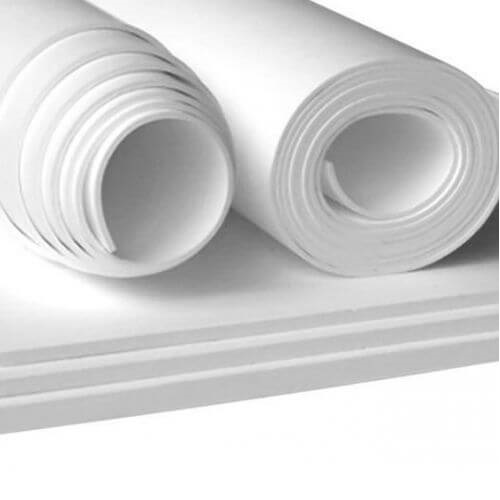
Rubber gasket materials are elastomeric compounds that rely on physical deformation under compression to fill surface irregularities and create a leak-tight seal. Unlike rigid or semi-rigid sheet materials, rubber gaskets conform to flange surface imperfections, which makes them highly effective in lower-pressure applications or where flange surfaces are not perfectly finished. However, their elastomeric nature also introduces limitations in temperature resistance and long-term creep behavior.
The most commonly specified rubber gasket compounds in industrial sealing include:
Each rubber compound has a specific hardness rating measured in Shore A durometer, typically ranging from 40 to 80 Shore A for gasket applications. Softer grades (40-60 Shore A) conform more easily to irregular surfaces but are more prone to extrusion under high bolt loads. Harder grades (65-80 Shore A) resist extrusion but require better flange surface quality to achieve a leak-free seal.
Rubber gaskets are available in full-face, ring, and custom-cut profiles. They are particularly effective in water treatment, HVAC systems, food-grade piping, and sanitary applications where chemical aggressiveness is low and surface sealing flexibility is more important than high-temperature resistance. For applications requiring FDA or NSF compliance, specific rubber compounds are formulated without harmful plasticizers or vulcanizing agents.
A direct side-by-side comparison is the most effective way to understand the operational differences between these two material categories. The table below summarizes the core performance parameters across the most critical sealing application variables.
| Performance Parameter | Non-Asbestos Sheet | Rubber Gasket Material |
| Maximum Temperature (Continuous) | Up to 450 degrees C (grade dependent) | Up to 200 degrees C (FKM/Silicone) |
| Minimum Temperature | -100 degrees C | -60 degrees C (Silicone) |
| Maximum Pressure | Up to 20 MPa | Up to 2 MPa (standard grades) |
| Chemical Resistance | Broad (acid, alkali, oil, steam) | Compound-specific |
| Compressibility (ASTM F36) | 7% to 15% | 15% to 40% |
| Recovery Rate | Greater than 45% | Greater than 60% |
| Creep Relaxation Resistance | Excellent | Moderate to Poor |
| Tensile Strength | Greater than 9 MPa (machine direction) | 5 to 15 MPa (compound dependent) |
| Flange Surface Requirement | Ra 3.2 to 6.3 micrometers recommended | Ra 6.3 to 12.5 micrometers acceptable |
| Steam Resistance | Excellent (with graphite or PTFE coating) | Good (EPDM only) |
| Oil and Fuel Resistance | Excellent | Good (NBR only) |
| FDA / Food Grade Availability | Yes (specific grades) | Yes (specific compounds) |
| Halogen-Free Option | Yes | Yes (EPDM, Silicone) |
| Typical Lead Time | 3 to 7 days (standard sheet) | 1 to 5 days (standard sheet) |
This comparison makes clear that Non-asbestos Sheet materials consistently outperform rubber gaskets in high-temperature, high-pressure, and chemically aggressive environments. Rubber gaskets, however, retain a performance advantage in applications requiring high surface conformability, resilience after decompression, and cost-effective sealing in lower-demand systems.
Before finalizing a material selection, engineering teams need to review detailed product specifications against their system design requirements. At Ningbo Kaxite Sealing Materials Co., Ltd., our technical team recommends evaluating the following parameters for every sealing application.
| Parameter | Standard Grade | High-Temperature Grade | Test Standard |
| Thickness Range | 0.4mm to 3.0mm | 0.5mm to 6.0mm | ISO 534 |
| Density | 1.6 to 2.0 g/cm3 | 1.8 to 2.2 g/cm3 | ASTM F1315 |
| Compressibility | 7% to 12% | 8% to 15% | ASTM F36 |
| Recovery Rate | Greater than 45% | Greater than 50% | ASTM F36 |
| Tensile Strength (MD) | Greater than 9 MPa | Greater than 11 MPa | ASTM F152 |
| Max Operating Temperature | 300 degrees C | 450 degrees C | Internal Test |
| Max Operating Pressure | 10 MPa | 20 MPa | DIN 28090 |
| Stress Relaxation (16h, 300 degrees C) | Less than 40% | Less than 35% | DIN 52913 |
| Sheet Size | 1500 x 1500mm | 1500 x 3000mm | Custom available |
| Color | Red, Gray, Black | Gray, Black | Visual |
| Parameter | NBR Grade | EPDM Grade | FKM (Viton) Grade |
| Hardness (Shore A) | 60 to 70 | 55 to 70 | 65 to 80 |
| Tensile Strength | Greater than 10 MPa | Greater than 8 MPa | Greater than 12 MPa |
| Elongation at Break | 200% to 400% | 250% to 450% | 150% to 300% |
| Temperature Range | -40 to +120 degrees C | -50 to +150 degrees C | -20 to +200 degrees C |
| Oil Resistance | Excellent | Poor | Excellent |
| Steam Resistance | Moderate | Excellent | Good |
| Ozone Resistance | Poor | Excellent | Good |
| Compression Set (70h at 100 degrees C) | Less than 30% | Less than 25% | Less than 20% |
| Thickness Range | 0.5mm to 50mm | 0.5mm to 50mm | 0.5mm to 25mm |
Reviewing these tables side by side reveals that neither material is universally superior. The correct choice depends entirely on your system's temperature, pressure, and chemical exposure profile. Our technical team at Ningbo Kaxite Sealing Materials Co., Ltd. is available to review your application requirements and recommend the optimal grade from our product range.
The consequences of a gasket failure extend far beyond a simple leak. In a refinery, a failed flange seal can trigger a fire, environmental release, or process shutdown costing hundreds of thousands of dollars per hour. In a pharmaceutical plant, a compromised seal can lead to product contamination and regulatory action. In a power generation facility, a steam leak at high temperature and pressure is a direct safety hazard. Material selection is therefore not an administrative formality; it is a core engineering responsibility.
Our Non-asbestos Sheet products are specified across the following industries for the reasons outlined below:
Rubber gaskets, meanwhile, are preferred in these industry contexts:
Understanding where each material performs at its best allows procurement and engineering teams to standardize their material specifications and reduce the risk of premature seal failure across their facility.
Total cost of ownership is frequently misunderstood in sealing material procurement. The purchase price of a gasket material represents only a fraction of its true cost over the life of the equipment. A low-cost rubber gasket that requires annual replacement in a high-temperature application will cost significantly more over five years than a premium Non-asbestos Sheet gasket that lasts three to five times longer under the same conditions. Understanding the full cost picture is essential for making economically rational material selections.
The following factors should be considered when evaluating cost and lifespan:
At Ningbo Kaxite Sealing Materials Co., Ltd., our procurement specialists work with clients to calculate the total cost of ownership for their specific applications. In many cases, upgrading from a standard rubber gasket to a correctly specified Non-asbestos Sheet results in measurable reductions in maintenance cost and operational risk over a three-to-five-year maintenance cycle.
The decision between Non-asbestos Sheet and rubber gasket materials is not a simple preference choice. It is an engineering decision grounded in application-specific temperature, pressure, chemical environment, and total lifecycle cost. Non-asbestos Sheet materials deliver superior performance in high-temperature, high-pressure, and chemically aggressive applications, offering excellent creep resistance, long service life, and broad chemical compatibility. Rubber gasket materials offer cost-effective performance in lower-temperature, lower-pressure applications where surface conformability and elastomeric recovery are the primary sealing requirements.
Ningbo Kaxite Sealing Materials Co., Ltd. manufactures and supplies both product categories to clients across more than 40 countries. Our Non-asbestos Sheet product range covers standard industrial grades, high-temperature grades, acid-resistant grades, and FDA-compliant food-grade materials, all produced under strict quality management systems aligned with ISO 9001 standards. Our technical team is available to review your application data, recommend the correct material grade, and provide sample materials for evaluation before your final procurement decision.
If you are ready to source a sealing material that performs reliably across demanding operating conditions, contact our team today. Send our engineers your flange specifications, operating temperature and pressure data, and fluid type, and we will respond within 24 hours with a formal material recommendation and quotation. Ningbo Kaxite Sealing Materials Co., Ltd. is your trusted partner for precision sealing solutions.
A: Yes, Non-asbestos Sheet materials are designed as functional replacements for asbestos-based sheet gaskets and can be cut to the same dimensions and installed using the same bolt torque procedures. However, a direct substitution should be preceded by a material compatibility check, because the specific fiber and binder composition of Non-asbestos Sheet grades varies, and the correct grade must be matched to the operating temperature, pressure, and fluid type of the original system. In most standard industrial flange applications, our Non-asbestos Sheet grades meet or exceed the sealing performance of legacy asbestos materials while fully complying with modern health and safety regulations. Our technical team recommends reviewing the DIN 28090 or ASME Class sealing performance data for the selected grade before final installation.
A: Steam service is one of the most demanding conditions for any sealing material because it combines elevated temperature, pressure, and a chemically reactive medium that accelerates degradation in many elastomers. For low-pressure steam below 0.6 MPa and temperatures below 150 degrees C, EPDM rubber gaskets perform reliably and are a cost-effective choice. For saturated steam above 150 degrees C or superheated steam at any pressure, Non-asbestos Sheet is strongly preferred. Our graphite-reinforced Non-asbestos Sheet grades are specifically formulated for steam service, offering excellent resistance to steam oxidation, low creep relaxation under sustained bolt load, and compliance with EN 1514-1 flange standards. Attempting to use standard rubber gaskets in high-pressure or superheated steam service leads to rapid compression set, extrusion failure, and seal loss.
A: Food-grade and pharmaceutical-grade sealing applications require materials that do not leach harmful substances into the process fluid. When sourcing Non-asbestos Sheet for these industries, you should verify the following: FDA compliance under 21 CFR (Code of Federal Regulations) for materials in contact with food or food-processing equipment; REACH compliance confirming the absence of substances of very high concern on the European Chemicals Agency candidate list; RoHS compliance for the absence of restricted hazardous substances; and where applicable, USP Class VI compliance for pharmaceutical contact applications. Ningbo Kaxite Sealing Materials Co., Ltd. supplies FDA-compliant Non-asbestos Sheet grades with full material traceability documentation, test reports, and certificates of conformance available upon request for every production batch.
A: Rubber gasket failures fall into several distinct categories, each with a specific root cause. Compression set failure occurs when the gasket permanently deforms under bolt load and loses the contact stress needed to maintain a seal; this is avoided by selecting a rubber compound with a low compression set value and ensuring bolts are re-torqued after initial thermal cycling. Chemical degradation failure occurs when the rubber compound is incompatible with the process fluid; this is avoided by confirming compound-specific chemical resistance data before material selection. Thermal aging failure occurs when the operating temperature exceeds the rubber compound's rated maximum, causing oxidative hardening and cracking; this is avoided by selecting the correct compound for the actual operating temperature with an appropriate safety margin. Extrusion failure occurs when the gasket is insufficiently supported against internal pressure, typically in full-face flange applications with oversized bolt holes; this is resolved by using a harder durometer compound or switching to a semi-rigid material such as Non-asbestos Sheet.
A: Proper storage and handling of Non-asbestos Sheet is straightforward but important for maintaining dimensional accuracy and mechanical properties until installation. Sheets should be stored horizontally in a flat, dry environment at temperatures between 5 degrees C and 40 degrees C, away from direct sunlight, solvents, and heat sources. Storing sheets vertically or in a curved position for extended periods can cause permanent warping, which makes accurate gasket cutting more difficult. When cutting gaskets, use sharp steel rule dies, water jet cutting, or CNC punch cutting equipment to achieve clean edges without delamination. Avoid impact cutting methods that compress the sheet edge, as this can alter the local density and affect sealing performance at the gasket inner diameter. Gaskets should be inspected visually for cracks, delamination, or surface damage before installation, and any damaged units should be discarded rather than installed.