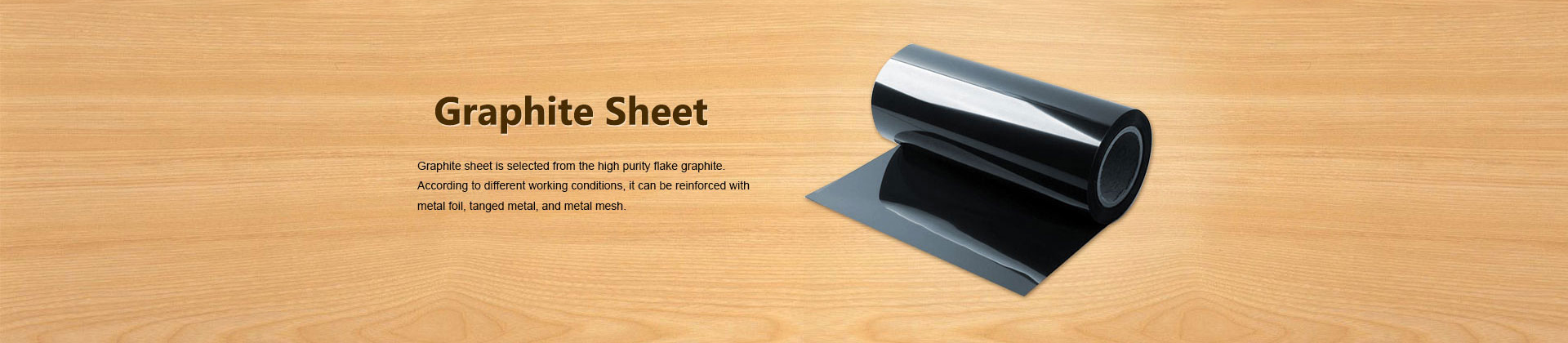
When sourcing industrial sealing solutions, graphite sheets are among the most reliable materials for high-temperature and high-pressure applications. However, not all graphite sheets perform equally. Poor quality can lead to leaks, equipment damage, and costly downtime. Before committing to a bulk order, understanding the critical parameters that define a premium graphite sheet is essential. Our experience at Ningbo Kaxite Sealing Materials Co., Ltd. has shown that a systematic evaluation method saves both time and resources while ensuring operational safety and longevity.
This comprehensive guide walks you through professional evaluation techniques used by engineers and procurement experts. From density and purity to compression recovery and thermal stability, we break down each quality indicator. By the end, you will know exactly how to assess graphite sheet samples, interpret test data, and make informed decisions for bulk purchasing. Our factory follows strict quality protocols, and we want to share these insights so you can partner with confidence.
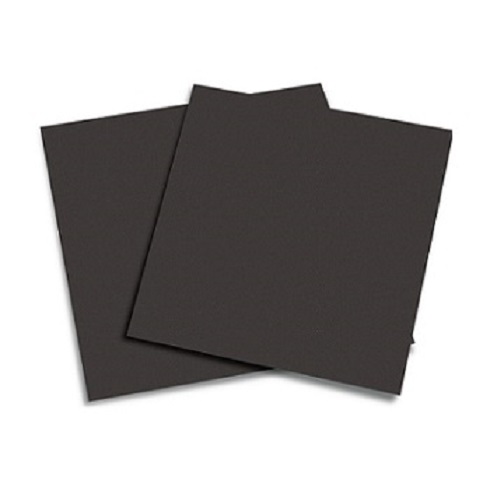
High-performance graphite sheets are engineered for gasketing, sealing, and heat dissipation. At Ningbo Kaxite Sealing Materials Co., Ltd., our factory prioritizes five core parameters that define whether a graphite sheet will survive extreme conditions or fail prematurely. When evaluating bulk orders, insist on documented specifications and sample testing for each of the following:
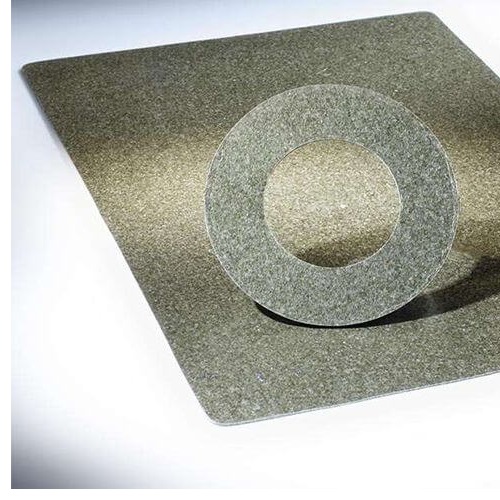
Beyond these numbers, visual inspection matters. A premium graphite sheet should have a uniform, silky black appearance without delamination, cracks, or foreign particles. Our factory employs laser-based thickness measurement and automated optical inspection on every production batch of graphite sheet. For bulk purchasing, request a material test certificate (MTC) from an accredited lab. Remember that price differences often reflect these parameter variations. A cheap sheet with low density and high ash content will require frequent replacement, increasing total ownership cost. Always combine specification review with physical sample testing.
While you may not have a full metallurgical lab, basic on-site tests can quickly eliminate low-quality graphite sheets. At Ningbo Kaxite Sealing Materials Co., Ltd., we encourage buyers to perform three simple but revealing tests before bulk purchasing. Our factory provides sample kits specifically for buyer evaluation. Here is how you can assess density and purity using minimal equipment:
Cut a 50mm x 50mm sample from the graphite sheet. Measure its exact dimensions (length, width, thickness) using a digital caliper. Weigh the sample on a precision scale (0.01g accuracy). Calculate volume = length x width x thickness. Then density = mass/volume. Compare with supplier’s datasheet. For a reliable graphite sheet, density should deviate less than 5% from stated value. Our factory guarantees all graphite sheet batches within ±3% tolerance.
Weigh a small sample (approx. 10g) accurately. Place it in a pre-weighed ceramic crucible. Heat in a muffle furnace at 700°C for 30 minutes (or use a powerful butane torch in well-ventilated area). After full combustion, cool and weigh the remaining ash. Ash content = (ash weight / original sample weight) x 100%. Premium graphite sheet leaves less than 1% ash. If ash exceeds 2%, purity is below 98% – unsuitable for critical seals.
Press a piece of transparent adhesive tape firmly onto the surface of the graphite sheet. Peel it off quickly. Observe the tape for loose particles or dark dust. Heavy shedding indicates poor expansion process or excessive binder residue. High-quality graphite sheet from our factory shows minimal to no particle transfer. This simple method reveals internal cohesion issues without costly instruments.
Additionally, request ICP-OES analysis for sulfur and chloride from the supplier’s lab. For bulk orders, independent third-party testing is worth the investment. At Ningbo Kaxite Sealing Materials Co., Ltd., we provide full traceability and retain samples from each production lot for two years. Our factory encourages customers to witness testing procedures. Remember that density and purity directly affect oxidation resistance – impure graphite starts degrading above 400°C, while high-purity grades withstand 500°C continuously. This difference is critical for exhaust or high-temperature flange applications.
Thermal conductivity is often overlooked, yet it determines how evenly a graphite sheet distributes heat across a gasketed joint. Poor thermal conductivity creates hot spots that accelerate gasket aging and flange distortion. In heat exchangers, cylinder head gaskets, and high-temperature reactors, thermal conductivity becomes a life-or-death parameter. Our factory designs graphite sheet with anisotropic thermal properties – very high in-plane conductivity and moderate through-plane conductivity – to optimize both sealing and heat dissipation.
Another overlooked fact: thermal conductivity correlates with density and crystalline structure. Highly compressed, well-aligned graphite flakes conduct better. When you see a graphite sheet with low density (<0.9 g/cm³) but claimed high conductivity, be skeptical. Our factory’s proprietary calendering process ensures both density and thermal performance are optimized simultaneously. During bulk evaluation, ask specifically for thermal diffusivity (mm²/s) and specific heat capacity. Convert to conductivity = diffusivity x density x specific heat. Always compare values at 25°C and 300°C – conductivity should not drop more than 15% at elevated temperature for a quality product. Poor sheets show 30-40% drop, causing localized overheating and gasket blowout.
Compression recovery and creep relaxation are the two most practical indicators of long-term sealing performance. A graphite sheet might look perfect upon delivery, but after a few thermal cycles, poor recovery leads to leakage. Our factory tests these parameters according to ASTM F36 and DIN 52913 standards. Here is how you can evaluate them before placing a bulk order:
Cut a 20mm diameter disc from the graphite sheet. Measure initial thickness (T0). Place the disc between two flat steel plates and apply a compressive load of 35 MPa (approx. 1100 kg on a 20mm disc) using a hydraulic press or torque wrench with load cell. Hold for 60 seconds. Release load, wait 60 seconds, then measure final thickness (T1). Recovery % = (T1 / T0) x 100. Premium graphite sheet from our factory shows recovery ≥ 45%. Anything below 30% indicates poor resilience and will likely cause cold-flow leakage.
While full creep testing requires specialized rigs, you can perform an accelerated screening: Compress a stack of 5 sheet samples between two flanges with a target gasket stress of 50 MPa. Maintain constant bolt load using disc springs. After 24 hours at 100°C, measure residual gasket stress. High-quality graphite sheet loses less than 15% of initial load. Our factory’s internal data shows that creep rates decrease significantly when density exceeds 1.0 g/cm³. For bulk purchasing, always request creep relaxation curves at both room temperature and maximum service temperature.
| Quality Level | Compression Recovery (ASTM F36) | Creep Relaxation at 150°C / 50 MPa (24h) | Recommended Application |
| Economy | < 25% | > 25% load loss | Non-critical, low temp |
| Standard | 25% – 40% | 15% – 25% load loss | General industrial |
| Premium (Ningbo Kaxite) | > 45% | < 12% load loss | High pressure/temp, cyclic |
Another valuable field test: install a sample graphite sheet between two flanges with known bolt torque. Subject the assembly to three thermal cycles from room temperature to 250°C and back. After each cycle, re-torque to the original specification. Premium graphite sheet requires less than 10% additional torque rotation. Poor sheets may need 20% or more, indicating excessive creep. Our factory’s graphite sheet maintains torque retention within 5% after 10 cycles – a result of precise expansion ratio control. For bulk purchases, demand to see third-party creep testing reports. Remember that recovery and creep are inversely related to purity; high purity generally improves both, but only if the exfoliation process preserves graphite crystallites. At Kaxite, our factory monitors expansion temperature to balance flake integrity and recovery.
In bulk purchasing, documentation is as important as physical properties. Without full traceability and third-party certifications, you risk counterfeit materials or inconsistent batches. Over 20 years in the industry, our factory has seen disastrous failures caused by fake certificates. Here is the minimum certification package you must demand for every graphite sheet shipment:
How to verify certificates? Contact the issuing lab directly using contact details from their official website – do not use phone numbers printed on the certificate (fraudsters copy formats). Many reputable labs provide online verification portals. Additionally, perform a random sample test from each batch for key parameters like sulfur content (ASTM D4239) or chloride (ion chromatography). Our factory encourages customers to take samples during production visits. For bulk orders, consider a pre-shipment inspection by an independent third party like SGS or Bureau Veritas. The extra cost (typically 0.5-1% of order value) is negligible compared to a plant shutdown due to gasket failure. Finally, ask for ISO 9001:2015 certification of the supplier’s manufacturing site – this indicates systematic quality management. At Kaxite, we hold both ISO 9001 and IATF 16949, demonstrating commitment to automotive-grade quality. Never underestimate the power of documented traceability – it separates professional manufacturers from commodity traders. Our graphite sheet batches are archived for 10 years, enabling root cause analysis if any issue arises years later.
Evaluating graphite sheet quality before bulk purchasing requires a balanced approach of specification review, simple on-site tests, and rigorous documentation checks. Start by defining your application’s temperature, pressure, and media requirements. Then request full datasheets and samples from at least three suppliers. Perform density, ash residue, and tape peel tests as described. For critical applications, invest in third-party verification of thermal conductivity, creep relaxation, and impurity levels. Remember that the cheapest graphite sheet often becomes the most expensive after repeated failures and downtime.
At Ningbo Kaxite Sealing Materials Co., Ltd., our factory combines decades of sealing expertise with modern quality systems. We offer free sample testing for bulk inquiries and provide full MTR packages before shipment. Our graphite sheet is trusted by chemical plants, oil refineries, and power generation facilities worldwide. When you source from us, you get consistent density (±0.02 g/cm³), recovery above 45%, and sulfur below 150 ppm. Our production capacity exceeds 500 tons per year, ensuring stable supply for large projects.
Ready to secure premium graphite sheet for your next bulk order? Contact our factory today to request samples, discuss custom thicknesses, and receive a detailed quotation. Our engineering team will help you select the right grade for your temperature and pressure profile. Don’t compromise on seal integrity – partner with Ningbo Kaxite Sealing Materials Co., Ltd. for reliable graphite sheet solutions that perform flawlessly in the field.
Question 1: What is the minimum acceptable density for a high-performance graphite sheet used in steam service up to 400°C?
Answer: For continuous steam service at 400°C and pressure above 40 bar, the graphite sheet must have a minimum bulk density of 1.0 g/cm³ according to DIN 28091-3. Our factory recommends 1.10 g/cm³ or higher to prevent oxidation penetration and maintain sealing stress. Below 0.9 g/cm³, internal porosity allows steam to oxidize carbon rapidly, leading to weight loss and gasket disintegration within months. Always verify density using the water displacement method described above and cross-check with the supplier’s lot certificate. For superheated steam applications, consult Ningbo Kaxite Sealing Materials Co., Ltd. for special high-density grades up to 1.25 g/cm³.
Question 2: How can I visually distinguish a pure exfoliated graphite sheet from one mixed with fillers or binders?
Answer: Pure exfoliated graphite sheet has a characteristic metallic luster and flexible, slightly springy feel when bent. Sheets containing fillers (clay, mica, or carbon black) appear dull, powdery, or have an uneven surface texture. A simple acetone wipe test: rub a white tissue firmly on the surface. A pure graphite sheet leaves minimal gray residue; filler-containing sheets often shed significant colored particles. Additionally, pure graphite sheet floats on water surface due to low density and hydrophobic nature, while filled sheets may sink or absorb water quickly. Our factory’s graphite sheet passes the acetone test with zero binder transfer, confirming 100% exfoliated graphite without resin binders.
Question 3: Why does my current graphite sheet cause pitting on stainless steel flanges, and how to evaluate future purchases to avoid this?
Answer: Pitting corrosion results from electrochemical reactions caused by residual ions – primarily chloride (Cl⁻) and fluoride (F⁻) – in low-purity graphite sheet. During wet service conditions, these ions leach out and attack passive film of 304 or 316 stainless steel. To evaluate new graphite sheet, request ion chromatography test results focusing on chloride (<50 ppm absolute) and sulfate (<200 ppm). Also conduct a simple corrosion test: sandwich a small graphite sheet sample between two stainless steel washers, immerse in deionized water at 60°C for 72 hours, then check washers for pitting. Our factory’s graphite sheet uses ultra-pure expansion process guaranteeing chloride <30 ppm, making it safe for stainless steel flanges in chemical and pharmaceutical plants.
Question 4: What is the acceptable thickness tolerance when bulk ordering graphite sheet for laser-cut gaskets?
Answer: For automated gasket cutting using laser or waterjet, thickness tolerance directly impacts stacking and nesting efficiency. Premium graphite sheet should maintain ±0.03 mm for thicknesses 0.5–1.0 mm, and ±0.05 mm for 1.5–3.0 mm. Anything wider than ±0.08 mm causes misalignment in stacked cutting, increasing scrap rates by up to 15%. Our factory uses online laser micrometers every 500mm of production to ensure thickness consistency. When evaluating bulk suppliers, request a thickness profile map across the sheet’s width and length – maximum variation should not exceed 0.07mm on a 1.5mm nominal sheet. We provide gauge records for each master roll of graphite sheet.
Question 5: How do I verify that a graphite sheet batch has not exceeded its shelf life or been improperly stored before shipment?
Answer: Flexible graphite sheet does not have a chemical shelf life, but improper storage (humidity >70%, temperature >40°C, or exposure to oils) can degrade its mechanical properties. When evaluating bulk orders, check packaging: each roll should be sealed in polyethylene film with desiccant bags. Perform a “fold test”: bend a 50mm sample 180° over a 5mm mandrel. Premium graphite sheet withstands 5 folds without cracking. Degraded material cracks on the first fold. Also measure moisture content per ASTM D4442 – below 1.5% is acceptable. Our factory ships all graphite sheet in humidity-controlled packaging with moisture indicator cards, and we include storage guidelines. For long-term projects, we can certify production date within 3 months of shipment. Always insist on fresh stock and avoid “clearance” materials without full traceability.