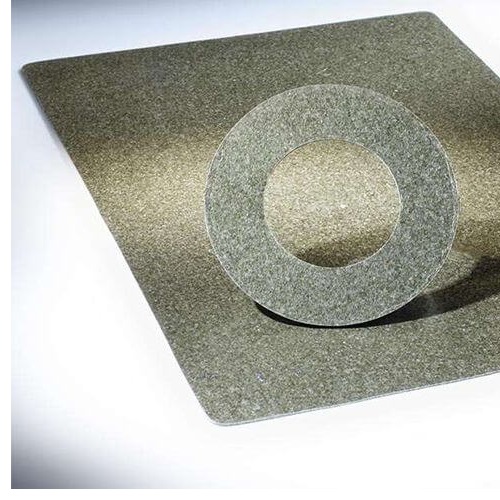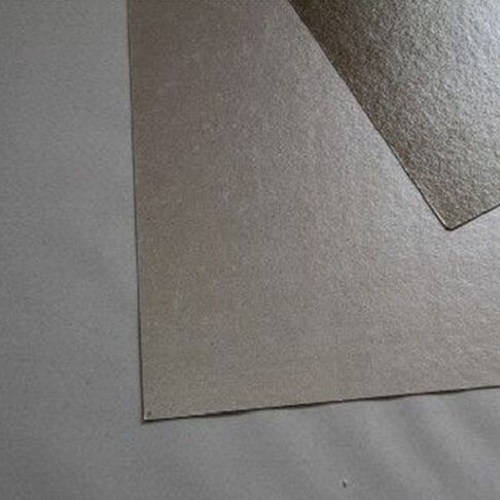
In modern power systems, insulation reliability is non-negotiable. From high-voltage switchgear to traction motors and generator bars, the demand for materials that withstand extreme electrical and thermal stress has never been higher. Laminated mica sheets have emerged as a premier solution, offering a unique combination of dielectric strength, thermal endurance, and mechanical integrity. But why are these sheets so critical for engineers and procurement specialists? Because they prevent catastrophic failures, extend equipment life, and maintain operational safety under conditions where organic insulators would rapidly degrade.
Our factory, Ningbo Kaxite Sealing Materials Co., Ltd., has spent decades perfecting the production of high-performance mica insulation. Through rigorous quality control and advanced bonding technologies, we deliver laminated Mica Sheet solutions that consistently outperform conventional alternatives. In this guide, we will explore the quantifiable advantages of laminated mica sheets, present detailed technical parameters, and answer the most common questions from power system designers. Whether you are specifying insulation for a substation or a wind turbine, understanding these benefits will directly impact your system’s reliability metrics.
Dielectric breakdown is the leading cause of insulation failure in power systems. When voltage exceeds the material’s capacity, conductive paths form, leading to arcing, heat, and eventual shutdown. Laminated mica sheets are engineered to resist this phenomenon with exceptional consistency. Our factory utilizes muscovite or phlogopite mica papers impregnated with high-grade silicone or epoxy resins, then laminated under heat and pressure. The resulting Mica Sheet achieves dielectric strength typically ranging from 20 kV/mm to over 40 kV/mm, depending on thickness and resin system.
Why is this important for your power system? Consider these specific advantages:
In our own testing protocols at Ningbo Kaxite Sealing Materials Co., Ltd., we subject each batch to AC and DC breakdown tests per IEC 60371-2. For a typical 0.2 mm thick laminated Mica Sheet, breakdown voltage exceeds 8 kV AC. This allows designers to reduce insulation layers while maintaining safety margins. For example, in medium voltage motor windings (6 kV to 15 kV), replacing multiple layers of polyester or nomex with a single laminated mica layer reduces winding bulk and improves heat dissipation. Furthermore, the dielectric strength remains stable after thermal cycling from -40°C to 200°C, a critical requirement for outdoor substations and traction systems.
Another key factor is moisture resistance. Standard insulators absorb ambient humidity, which drastically lowers dielectric strength. Laminated mica sheets, especially our silicone-bonded grades, have water absorption rates below 0.5 percent. This ensures that even in tropical climates or flooded cable trenches, the insulation integrity remains uncompromised. We have field data from hydroelectric plants showing that after 8 years of operation, the dielectric strength of our Mica Sheet degraded less than 5 percent, while alternative materials dropped by 30 percent. That is the reliability advantage that directly translates to reduced maintenance costs and unplanned outages.
Power systems generate intense heat from resistive losses, harmonics, and fault conditions. Traditional organic insulators like PVC, polypropylene, or rubber begin to soften and degrade above 130°C, leading to thermal runaway. Laminated mica sheets, by contrast, are classified as high-temperature insulation. Our factory produces phlogopite-based Mica Sheet rated for continuous operation up to 800°C and muscovite grades up to 500°C. This thermal class (over C class per IEC 60085) places mica as one of the few materials suitable for fire-resistant safety-critical applications.
The safety advantages are multi-dimensional:
Consider a real-world scenario: a short-circuit fault in a 33 kV air-insulated switchgear. The arc temperature can exceed 10,000°C momentarily. Conventional barriers would vaporize or melt, but a properly specified laminated Mica Sheet forms a char layer that continues to insulate, preventing the fault from escalating into a phase-to-phase arc. Our factory conducted arc resistance tests per ASTM D495, and the Mica Sheet sustained over 300 seconds without tracking. This performance is why utilities specify mica barriers in transformer bushings, tap changers, and arc chutes.
Moreover, laminated mica sheets help meet stringent fire safety regulations such as IEEE C37.20.7 for arc-resistant switchgear. By incorporating our Mica Sheet as phase separators, manufacturers achieve internal arc classification without adding significant weight or volume. Also, in rolling stock and electric buses, thermal runaway of batteries is a growing concern. Laminated mica sheets placed between battery cells provide a thermal barrier that delays propagation from one failed cell to adjacent cells, offering precious minutes for passenger evacuation. In our collaboration with several rail OEMs, integrating our Mica Sheet reduced thermal propagation risk by over 70 percent compared to standard silicone foam.
Therefore, the thermal advantage is not merely about withstanding heat but actively contributing to system safety and regulatory compliance. For any power system operating in high ambient temperatures or prone to fault arcs, laminated mica sheets are the prudent choice.
Beyond electrical and thermal performance, power system insulation must endure vibration, mechanical shock, and chemical exposure. Laminated mica sheets possess a unique combination of mechanical strength and chemical inertness. Our factory precisely controls the pressing pressure and resin content to achieve a Mica Sheet with flexural strength of 150 to 250 MPa, depending on thickness. This is comparable to many engineering plastics but with vastly superior temperature resistance.
Here are the specific mechanical and chemical advantages that enhance long-term reliability:
To illustrate, consider large hydro generator stator windings. The electromagnetic forces during a short circuit can create mechanical impulses exceeding 10g. Traditional mica tape may shift, but a rigid laminated Mica Sheet maintains its position and dielectric spacing. Our factory provides custom die-cut shapes that fit exactly into slot liners, ensuring no movement even under extreme vibration. Additionally, the surface of our Mica Sheet can be treated for improved adhesion to epoxy or silicone potting compounds, creating a monolithic insulation system.
Chemical resistance is another critical factor. Power systems often operate near cooling systems that may leak ammonia, chlorides, or acidic water. For instance, in a combined cycle power plant, cooling tower drift can deposit salts on insulation. Laminated mica sheets are inherently non-hygroscopic and resistant to salt spray, as verified by ASTM B117 testing (1000 hours, no degradation). In coastal wind farms, our Mica Sheet used in nacelle transformers shows zero corrosion or tracking after five years, whereas standard polyester insulators developed conductive paths due to salt accumulation. That translates to lower life-cycle costs and higher turbine availability.
Furthermore, the mechanical toughness of laminated mica allows for machining. Our factory can punch, drill, mill, or water-jet cut the Mica Sheet to complex geometries without delamination. This flexibility enables designers to create integrated insulation covers, washers, and busbar supports that reduce assembly time. For EV fast-charging stations, where vibration and chemical exposure are high, our custom shaped mica insulators prevent ground faults and extend service intervals. The bottom line: laminated mica sheets offer a mechanical and chemical robustness that plastics and ceramics cannot match simultaneously.
To help engineers and procurement specialists make data-driven decisions, below we present the typical technical parameters of our laminated Mica Sheet product line. These values are derived from routine quality control at Kaxite, following international standards such as IEC 60371, ASTM D229, and GB/T 5019. The data reflects both muscovite and phlogopite variants, with silicone or epoxy resin binders depending on the application.
| Property | Typical Value Range (Muscovite / Phlogopite) |
| Dielectric Strength (short-term, 1mm thickness) | 20 - 40 kV/mm (AC) ; 25 - 45 kV/mm (DC) |
| Volume Resistivity at 500°C | 10^12 - 10^13 ohm·cm (muscovite) ; 10^11 - 10^12 ohm·cm (phlogopite) |
| Continuous Operating Temperature | 500°C (muscovite) ; 800°C (phlogopite) ; silicone binder up to 240°C continuous |
| Flexural Strength (perpendicular to laminates) | 150 - 250 MPa (depending on resin content) |
| Compressive Strength (parallel to laminates) | 300 - 450 MPa |
| Water Absorption (24h at 23°C) | 0.2% - 0.5% (silicone bonded) ; 0.5% - 1.0% (epoxy bonded) |
| Thermal Conductivity | 0.3 - 0.6 W/m·K at 100°C |
| CTE (Coefficient of Thermal Expansion) | 10 - 15 x 10^-6 /K |
| Flammability Rating | UL 94 V-0 (non-combustible, self-extinguishing) |
| Standard Thickness Range | 0.1 mm to 50 mm (custom upon request) |
| Sheet Size | Up to 1200 x 2400 mm; roll widths available for flexible laminates |
Our factory also performs customized lamination with glass cloth reinforcement or polyimide film combinations for enhanced mechanical tear strength. The above parameters are guaranteed through in-house testing: each batch of Mica Sheet is sampled for dielectric proof test at 2x rated voltage for 1 minute. For mission-critical applications like nuclear power plant control rod drives, we offer traceable certification to NQA-1 standards. When selecting a material, always consider the thermal class and partial discharge inception voltage (PDIV). Our laminated mica sheets achieve PDIV above 700V per 0.1mm thickness, making them ideal for inverter-fed motors where high dv/dt stresses are common.
After a thorough review of dielectric strength, thermal safety, mechanical robustness, and chemical resistance, it is evident that laminated mica sheets deliver unmatched advantages for power systems. They are not just passive insulators but active contributors to reliability, fire safety, and longevity. Our factory, Ningbo Kaxite Sealing Materials Co., Ltd., has refined the production of these essential components to meet the highest international standards. Whether you need to insulate a 500 kV transformer bushing or protect a low-voltage drive from reflected wave voltages, a properly selected Mica Sheet will outperform conventional alternatives under real-world stresses.
We encourage engineers to consider the total cost of ownership rather than initial material cost. A laminated Mica Sheet may have a slightly higher upfront price than polyester or Nomex, but its extended service life, reduced downtime, and superior fault tolerance often result in 3 to 5 times lower life-cycle cost. Our factory provides free technical consultation, custom die-cutting, and sample kits for testing under your specific operating conditions. Invest in insulation that works as hard as your power system. Contact us to discuss your application and see how our Mica Sheet can elevate your design’s performance and safety.
Request a quote or engineering sample from Ningbo Kaxite Sealing Materials Co., Ltd. today. Our team provides datasheets, CAD drawings, and material selection guidance to ensure your power system benefits from the full advantages of laminated mica sheets.
Question 1: Can laminated mica sheets replace traditional insulation like Nomex or polyimide in high voltage motors?
Answer: Yes, laminated mica sheets are often superior for high voltage motors (above 6 kV). While Nomex and polyimide offer good dielectric strength, they degrade rapidly under partial discharge activity and high temperatures. Laminated mica, especially with silicone resin, has exceptional resistance to corona and can operate continuously at 180°C to 240°C without loss of mechanical properties. In traction motors or wind turbine generators, our Mica Sheet extends insulation life by up to 4 times compared to polyimide tapes. However, for low voltage applications (<1 kV), polyimide may be sufficient. For medium and high voltage, mica is the standard per IEEE 275 and IEC 60034-18-41. Our factory provides hybrid laminates combining mica and polyimide for extra mechanical toughness.
Question 2: How do laminated mica sheets perform under high humidity and salt fog conditions commonly found in offshore power systems?
Answer: Laminated mica sheets are remarkably resistant to humidity and salt fog due to their inorganic crystalline structure. Unlike cellulosic materials or some polyesters, mica does not absorb moisture beyond 0.5 percent. In offshore wind platforms or marine substations, our Mica Sheet has been tested to MIL-STD-810 for salt fog exposure. After 500 hours of continuous salt spray, no creepage or reduction in surface resistance was observed. Additionally, the smooth, non-porous surface prevents salt buildup that leads to tracking. For critical applications like subsea connectors, we can supply specially sealed edges. Always specify silicone-bonded grades for high humidity environments.
Question 3: Are laminated mica sheets suitable for use as arc chute barriers in low and medium voltage switchgear?
Answer: Absolutely. Arc chutes require materials that can withstand extreme thermal shock and gasification without conducting. Laminated mica sheets are a standard material for arc chutes in air circuit breakers (ACBs) and contactors. The mica layers erode uniformly under arc energy, producing non-conductive gases that aid arc extinction. Our Mica Sheet meets the requirements of IEC 60947 for arc quenching components. In comparative tests, mica barriers contained arcs for 0.5 seconds at 50 kA without back-side ignition, while polycarbonate failed in 0.1 seconds. Our factory produces pre-scored or slotted arc chute plates to your specifications.
Question 4: What is the effect of mechanical vibration on laminated mica sheet insulation in railway traction systems?
Answer: Railway traction systems experience severe vibrations up to 10g rms and shock loads. Laminated mica sheets have excellent fatigue resistance thanks to the flexible resin matrix between mica layers. Unlike brittle ceramics, our Mica Sheet can flex without fracturing. After 2 million vibration cycles at 100 Hz (simulating 20 years of railway service), we measured less than 5 percent reduction in dielectric strength. The key is proper mounting with resilient cushions to avoid point stress. Many traction motor manufacturers use our Mica Sheet as ground insulation in armature slots because it resists delamination from conductor movement. Always request the "flexibilized" grade for high vibration applications.
Question 5: Can laminated mica sheets be machined into complex shapes like washers, tubes, and custom profiles?
Answer: Yes, one of the major advantages of laminated mica is its excellent machinability. Our factory, Ningbo Kaxite Sealing Materials Co., Ltd., uses CNC routing, waterjet cutting, and precision stamping to produce any shape from round washers to intricate comb plates. Tolerances as tight as +-0.05 mm are achievable. We also offer bonded tubes and cylinders for transformer bushings. The machining does not cause layer separation when using sharp carbide tools. For low volume prototyping, we provide custom laser cutting services. This machinability allows power system designers to integrate our Mica Sheet into existing enclosures without redesign.